Next-Generation Firefighting Capability Defined

We are formulating a national level strategic plan that leverages technologies
to transform the way wildfires are fought
We are formulating a national level strategic plan that leverages technologies
to transform the way wildfires are fought

As wildfires grow in scale and intensity, firefighters need advanced tools to enable faster, safer, and more effective understanding and interventions —protecting lives, communities, assets, and ecosystems. Our mission is to create a transformative roadmap that unites cutting-edge science, technology, and partnerships to pioneer a new era in wildfire management: faster, smarter, and more effective than ever before.

Our team was the first to deploy drones for wildfire mapping. We've been at the forefront of revolutionizing unmanned aircraft technologies and pioneering their safe use in the National Airspace System for civil applications.
With drones and in other arenas, we have proven the ability to elevate critical issues to the national stage, mobilizing attention, resources, and building high-impact partnerships to drive transformative, system-level change. Now we are channeling that same capacity toward one of the nation’s greatest challenges: wildfire.
Applying deep expertise in technology integration and operations, as well as public–private–philanthropic collaborations, we are endeavoring to foster nationwide change.
The team is focused on identifying an actionable national strategy to develop, integrate, and test a suite of tools that can transform wildfire management and ensure that innovations move swiftly to field use.
By leveraging the latest technologies, collaboration strategies, and public-private partnerships we unlock game-changing solutions that empower proactive decisions, streamline operations, inform communities, and deliver hope in the face of growing wildfire challenges.
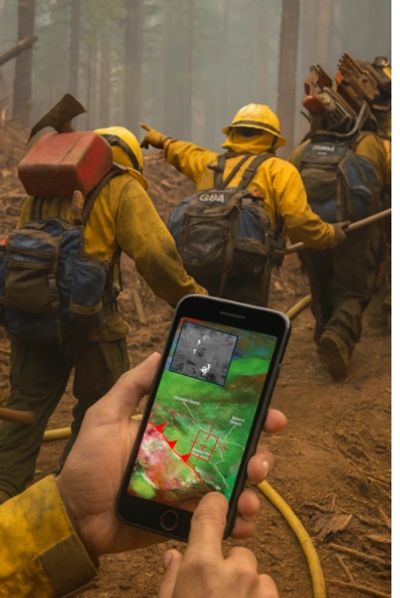

Today, communications among first responders can be intermittent or fail in remote areas, dense smoke, or during infrastructure damage. We can enable continuous connectivity.
Instead of periodic or low resolution imagery of the fire, we can enable near continuous data to support accurate real-time decision making.
Data is crucial for wildfire prediction. We can enable far more accurate forecasting, better resource allocation, and enhanced safety measures.
New types of Personal Protective Equipment, thermal vision, heads-up displays, monitoring of real-time vitals and biometrics, and mobile decision support tools can enable firefighters to do more and be safer.
Autonomous systems, such as drones and AI-driven devices, can enter areas too dangerous for humans, provide persistent situational awareness, and offer precise and super fast information that enables new levels of prediction, detection and tactical response.
Public information and alert systems can be spotty, not reliable, and difficult for the public to use. We can enhance alerts, notifications, and real-time information access that enables a more informed public, better evacuation, and safer outcomes.
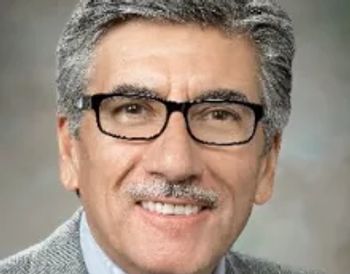
JOHN DEL FRATE
Brings extensive experience leading NASA programs that demand advanced expertise in technology testing, systems integration, and real-world deployment. John played a key role in applying solar energy and fuel cell technology to power high altitude drones. In this effort, he ensures the team's consistent focus on delivering
JOHN DEL FRATE
Brings extensive experience leading NASA programs that demand advanced expertise in technology testing, systems integration, and real-world deployment. John played a key role in applying solar energy and fuel cell technology to power high altitude drones. In this effort, he ensures the team's consistent focus on delivering an achievable and impactful plan - as directed by our NASA sponsor - acting as FireTechX Study manager in his capacity as a Program Manager for Analytical Mechanics Associates.

SCOTT DANN
Scott is Director of Strategic Development at MTSI and is a recognized pioneer in the development of Unmanned Aircraft Systems (UAS), national airspace integration, and their first deployment for U.S. border protection. He led their groundbreaking use in demonstrating persistent communications and surveillance to wildfire incid
SCOTT DANN
Scott is Director of Strategic Development at MTSI and is a recognized pioneer in the development of Unmanned Aircraft Systems (UAS), national airspace integration, and their first deployment for U.S. border protection. He led their groundbreaking use in demonstrating persistent communications and surveillance to wildfire incident commanders. With a forward-looking vision to leverage the billions of dollars invested by the DoD in UAS technologies, strategic command and control infrastructures, and global connectivity, he has been a driving force behind technology innovation and an early advocate for a unified national strategy to bolster wildfire management. His demonstrated record of leadership in managing complex, large-scale technology programs across industry and government reflects exceptional technical expertise, strategic vision, and a focus on accelerating impactful change.

CHUCK JOHNSON
Chuck, known as a strategic mastermind, was instrumental in formulating and executing NASA's $300M program to safely introduce drones into our skies. He was a former air traffic controller at LAX. He now serves as both investor and operator in several startups advancing drone safety technologies as COO of both IO Aeronaut
CHUCK JOHNSON
Chuck, known as a strategic mastermind, was instrumental in formulating and executing NASA's $300M program to safely introduce drones into our skies. He was a former air traffic controller at LAX. He now serves as both investor and operator in several startups advancing drone safety technologies as COO of both IO Aeronautical Autonomy Labs and Level 5 Autonomy Labs. He is also Founder and CEO of GUIAS, a consulting firm, and is a master chess player.
KAREN "REN" ROBBINS
Led formation and operations of groundbreaking public-private partnerships and change programs. As Founder & CEO of AmTech Center for Collaboration, she introduced an unprecedented collaboration model to the federal government and managed projects worth $500M. Currently, she is building digital platforms in Africa, So
KAREN "REN" ROBBINS
Led formation and operations of groundbreaking public-private partnerships and change programs. As Founder & CEO of AmTech Center for Collaboration, she introduced an unprecedented collaboration model to the federal government and managed projects worth $500M. Currently, she is building digital platforms in Africa, Southeast Asia and Puerto Rico that provide emergency alerts and support mutual aid.
ED WAGGONER
Prior to his recent retirement, Ed was Deputy Associate Administrator for Programs in NASA’s Aeronautics Research Mission Directorate (ARMD) where he was responsible for translating research portfolio requirements into specific, actionable programs and projects. His broad portfolio responsibilities included particular emphasis
ED WAGGONER
Prior to his recent retirement, Ed was Deputy Associate Administrator for Programs in NASA’s Aeronautics Research Mission Directorate (ARMD) where he was responsible for translating research portfolio requirements into specific, actionable programs and projects. His broad portfolio responsibilities included particular emphasis on development and validation of technologies focused on Advanced Air Mobility and Sustainable Aviation. Previously, he had served in executive leadership positions as ARMD’s Director of the Integrated Aviation Systems Program and Director for Enterprise Architecture and Engineering at the interagency Joint Planning and Development Office. He has deep expertise in aerospace, system engineering, and government affairs. Currenty his is a Senior Principal at Crown Consulting.
KURT PAPATHAKIS
Serves as Deputy Manager for NASA’s “next-next” innovation portfolio, where he helps shape breakthrough concepts for the future of aviation. A recognized expert in electric and hybrid-electric propulsion systems, he has advanced research and technology development aimed at enabling cleaner, more efficient flight.
JOHN E. EVERLOVE
Directed and coordinated Emergency Medical Services in partnership with local, state and federal agencies including the FBI, the United States Secret Service and the White House Medical Unit. He received over 20 awards and commendations and served internationally in Nepal as part of a Disaster Response Medical Team. As
JOHN E. EVERLOVE
Directed and coordinated Emergency Medical Services in partnership with local, state and federal agencies including the FBI, the United States Secret Service and the White House Medical Unit. He received over 20 awards and commendations and served internationally in Nepal as part of a Disaster Response Medical Team. As a media commentator and expert witness, John is known for his ability to communicate about disaster issues.

VERONICA OLSEN
is a whole-systems thinker working at the nexus of design, social change, and regenerative systems. She was twenty years in South Africa leading and collaborating with multi-sector design initiatives, product innovations, and training. She is known for being an expert in participatory design and for deep experience providi
VERONICA OLSEN
is a whole-systems thinker working at the nexus of design, social change, and regenerative systems. She was twenty years in South Africa leading and collaborating with multi-sector design initiatives, product innovations, and training. She is known for being an expert in participatory design and for deep experience providing data-driven recommendations to government decision-makers for change programs.

HANNAH MILLER-VIGIL
is completing her senior year at University of California at Santa Barbara. She is focused on entrepreneurship and cross-cultural communication. She speaks Japanese and German. She conducted research in Tokyo on community response to disasters and has worked as a Congressional intern.